
How breast cancer awareness month helps with early detection and education
Published by
Emily Zarecki
on
Breast Cancer Awareness Month is an important reminder that education and early detection can make a meaningful difference. Regular screenings, including mammograms, can help find breast changes early, when there may be more treatment options available. Understanding what an abnormal result may mean—and what follow-up steps may come next—can help you feel more informed and prepared as you work with your care team. Continue reading to learn more.
What happens after an abnormal mammogram?
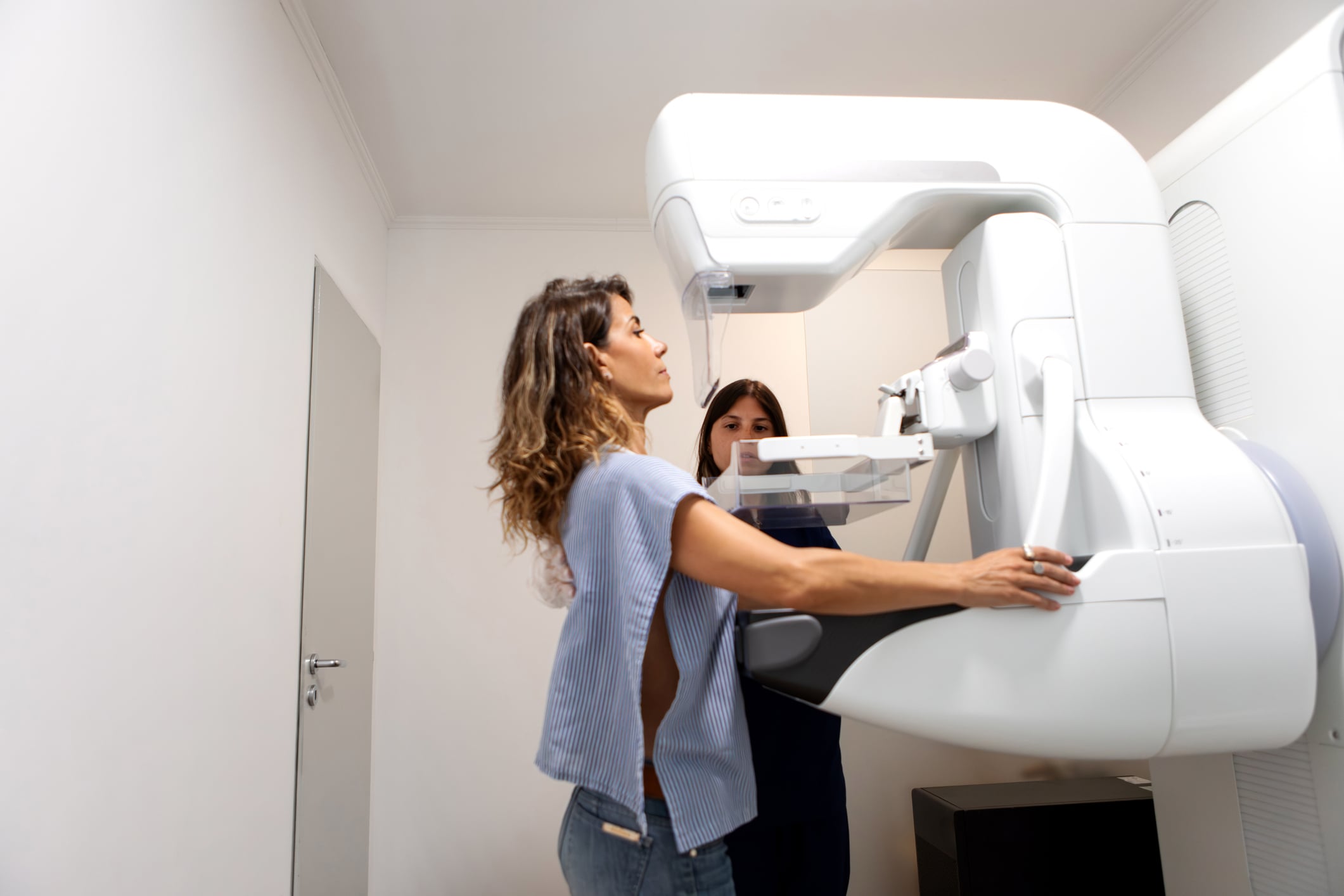
Mammograms have long been considered the gold standard to screen for breast cancer. A mammogram is a type of X-ray that uses a low dose of radiation to create an image of breast tissue. It’s an important tool for detecting abnormalities early. What happens if you receive an abnormal result from a mammogram?
What is an abnormal mammogram?
Receiving an abnormal mammogram result can feel overwhelming and frightening, but understanding the next steps can help replace fear with confidence.
It’s not uncommon to be called back after a screening mammogram. There are a few reasons for a mammogram to come back with an abnormal result. Some of the reasons include a change from a prior mammogram, a suspicious area that needs a closer look, or dense breast tissue that can make abnormalities more difficult to see on a mammogram and may require additional imaging.
An abnormal mammogram doesn’t mean you have cancer. Other diagnostic tests are needed to determine if an abnormality is cancerous. According to the American Cancer Society, fewer than one in 10 women called back for more tests are found to have cancer.
In many cases, additional imaging shows that the area of concern is not cancer and no further testing is needed. If questions remain after diagnostic imaging, your doctor may recommend a biopsy to learn more about the abnormality.
Diagnostic tests for breast cancer
After your doctor’s office calls with the results of an abnormal screening mammogram, the doctor will order diagnostic tests. The tests may include:
- Diagnostic mammogram uses additional mammogram images focused on a specific area of the breast to provide a closer look at an abnormal finding.
- Breast ultrasound uses sound waves to create clear views of breast tissue. It’s particularly helpful to distinguish between fluid-filled cysts and more solid masses.
- Breast MRI uses a magnetic field and radio waves to generate highly detailed views of breast tissue. An MRI is often recommended for women at higher risk for breast cancer.
Your doctor will typically schedule follow-up testing as soon as possible. While waiting for additional imaging and results can be stressful, most abnormal mammogram findings turn out to be noncancerous.
If a mass is detected using any of the diagnostic imaging tests listed above, your doctor or a radiologist will recommend a breast biopsy. During a breast biopsy, which is typically done under local anesthesia, a sample of cells or breast tissue is removed and examined under a microscope. Examining the cells or tissue under a microscope is the only way to determine if they are benign or malignant.
As a breast cancer survivor, I understand the worry that can come with an abnormal mammogram. My own abnormal mammogram led to a breast cancer diagnosis in 2020. Today, five years later, I'm grateful to be a survivor. Whether your follow-up testing reveals a benign condition or something that requires treatment, remember that you're taking an important step by staying on top of your screenings and following through on recommended care.
Mammogram coverage at Mass General Brigham Health Plan
Mass General Brigham Health Plan covers mammographic examination (mammogram) for preventive breast cancer screenings, including 3D mammograms. Women must be age 40 or older or have risk factors that require screening at a younger age. Follow-up breast ultrasounds are also covered as preventive breast cancer screenings (instead of or in addition to a screening mammogram). Breast MRIs are covered as preventive breast cancer screenings when criteria are met.
Learn more about risk factors for breast cancer.